About Us
Envisioning a future where Violence Against Women (VAW) does not exist
The ARC Centre for the Elimination of Violence against Women (CEVAW) mobilises research, collaborations, and partnerships to deliver scalable approaches to eliminate Violence Against Women (VAW).
Headquartered at Monash University, Clayton, Australia, the CEVAW network comprises 13 Chief Investigators from six Australian universities, and 45 Australian and international partner organisations.
CEVAW has adopted an innovative, three-fold approach to progressing these approaches, encapsulated in the Three I's Strategic Objectives.
Envisioning a future where VAW does not exist, CEVAW is developing a substantive evidence platform of socio-structural causes of VAW across the legal, security, economic, health, and political systems of Australia and the Indo-Pacific region, and will deploy these understandings to drive changes in national and regional approaches to the problem.
2025 marks CEVAW's second year of operation and implementation of the 2024–2030 Strategic Plan utilising the $50M investment from the ARC and contributing organisations. This report highlights a year of impactful research and community engagement by CEVAW, detailing progress against ARC-mandated Key Performance Indicators for a Centre of Excellence.
Director's Message
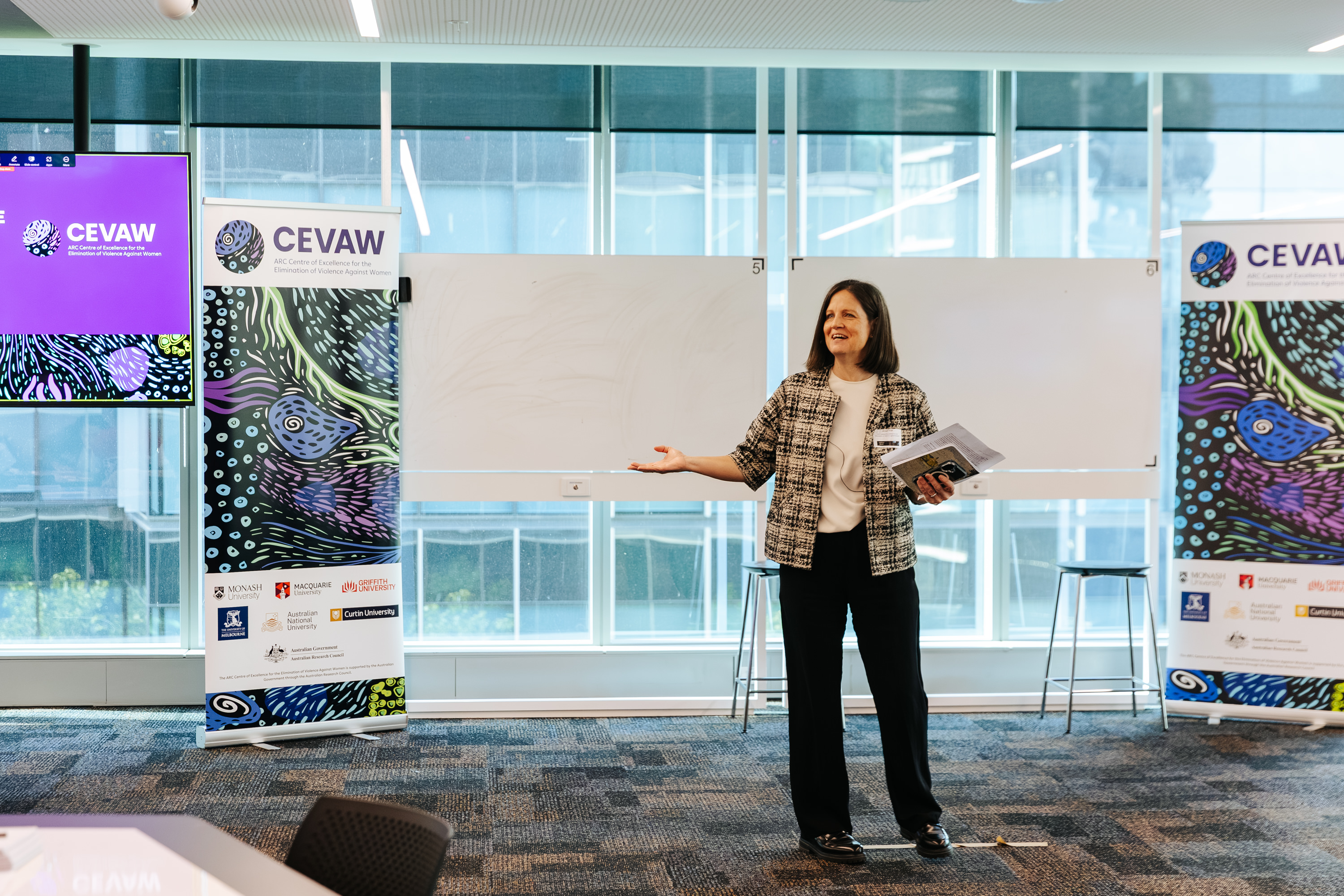
2025 marks our second year as an ARC funded Research Centre of Excellence for the Elimination of Violence against Women (CEVAW), and the time where I began to see the early sparks of research discovery and impact.
The foundations we have worked so deliberately to lay are now taking shape: research that is genuinely grounded in community, shaped by community priorities and our Indigenous-centred principles, and increasingly held in community ownership. These are the green shoots of a long-term vision – to build evidence on how to reduce violence against women in Australia and the Indo-Pacific region – and that vision is becoming real.
From the beginning, our work has never been about addressing gender-based violence in isolation. We are focused on strengthening diverse women's voices — including Indigenous women's leadership — in responding to women's safety and security challenges more broadly. Gender-based violence is one of those challenges, one that directly undermines women's ability to participate, and to shape safer futures.

This is urgent work. People's lives are at stake, and we carry that awareness with us every day.
At the same time, urgency cannot eclipse rigour. Building an evidence base that is meaningful, ethical, and capable of guiding communities and partners toward effective investment takes time. It requires patience, collective care, and a commitment to inclusively designing research. Establishing the ethical foundations for research, particularly longitudinal research on sensitive topics means working closely with communities and stakeholders as well as institutional committees to navigate complex local dynamics and processes. This is slow work, but it is essential work, and I am proud of the integrity with which our research and professional teams are approaching it.
Despite the scale and severity of the problem of violence against women becoming clearer over time, we are making progress. We see it in the partnerships we are building, the questions we are refining, and the new generation of multidisciplinary researchers and students dedicating their careers to this field. Their commitment gives me enormous hope.
This year also marked a period of remarkable growth. Our centre has nearly doubled in size, now comprising 207 members. Among them are 13 Chief Investigators, 36 Associate Investigators, 17 Research Fellows, 31 HDRs, 19 HDR Affiliates, 58 Affiliates, 15 Partner Investigators, and 17 Professional staff who choose to be part of our community because they believe in the work. This expansion reflects both the momentum we are building and the trust others are placing in our mission.
We launched a significant number of new projects in 2025, projects that deepen our engagement with communities, broaden our research agenda, and strengthen our capacity to generate evidence that matters. Each project represents a step toward understanding not only the drivers of gender-based violence, but also the pathways to prevention, resilience, and leadership. I encourage you to read through our annual report to learn more about this important work.
Looking ahead, I am energised by what is emerging. We are building a Centre that is collaborative, community-rooted, ethically grounded, and intellectually ambitious. We are training scholars who will carry this work forward long after the life of the centre. And we are contributing to a body of knowledge that can genuinely support communities, inform practice and policy, and guide investment where it is most needed.
The challenges remain significant, but so does our resolve.
We are growing, we are learning, and we are moving forward with purpose.
Professor Jacqui True
Director
The ARC Centre of Excellence for the Elimination of Violence Against Women
Message from the Chair
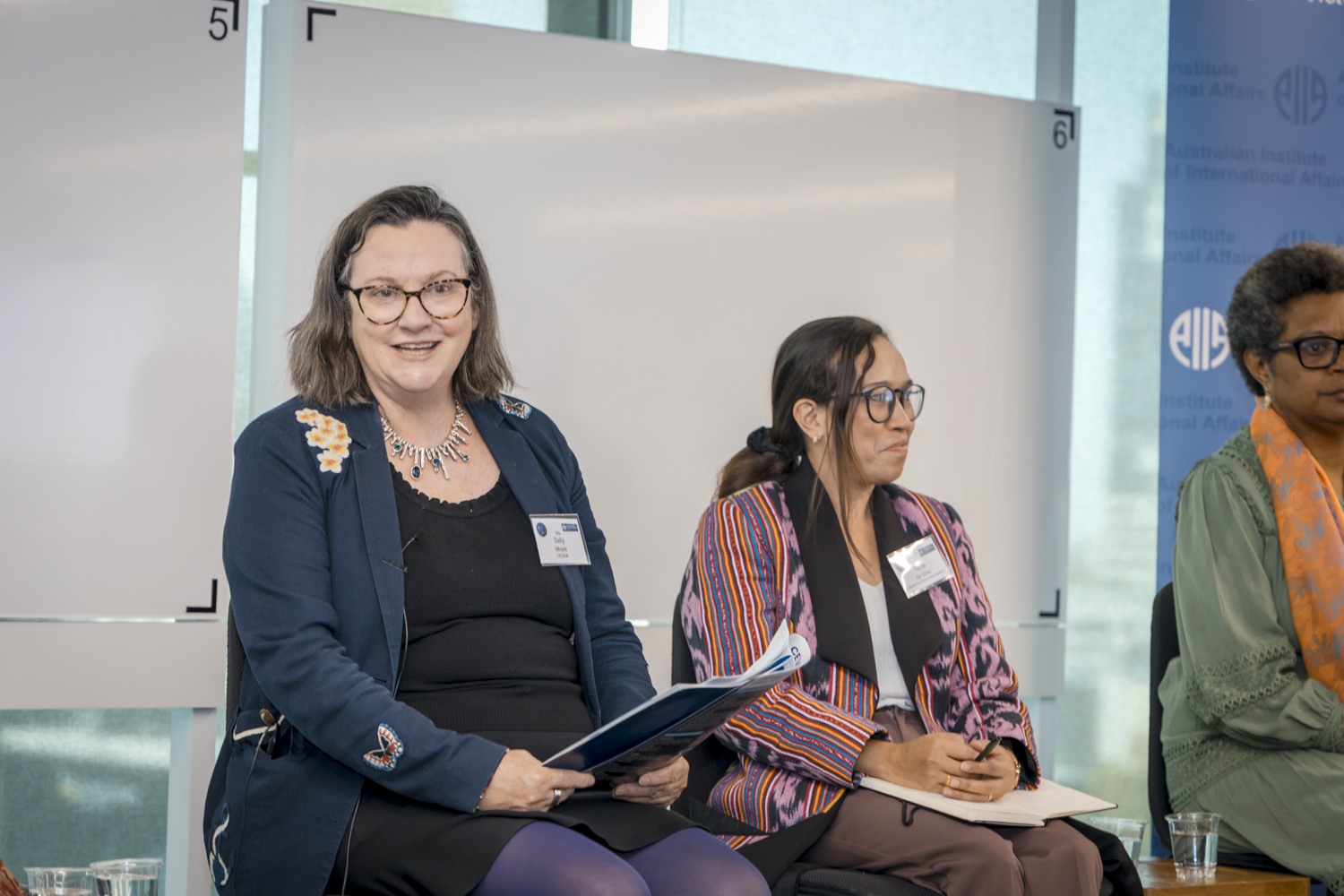
Serving as Chair of the Advisory Council to the ARC Centre of Excellence for the Elimination of Violence against Women (CEVAW) throughout 2025 has been a genuine privilege. As we conclude our second year, the scale of progress is unmistakable.
What began as an ambitious vision has rapidly evolved into a vibrant, collaborative, and deeply committed research community. The Centre is now firmly establishing itself as a leading hub for generating evidence, insight, and innovation to address the complex and varied dynamics of violence across the Indo-Pacific. This year has been marked by consolidation and growth, but also by a steady and deliberate strengthening of the foundations that will support CEVAW's long-term mission.
From a governance perspective, 2025 has been a year of purposeful refinement ensuring a clear strategic direction and structures to support the Centre's expanding scope.
In a field as sensitive, urgent, and ethically demanding as gender-based violence, strong governance is not merely administrative, it is a moral imperative.
Our commitment to integrity, transparency, and accountability guides every decision we make. Central to this is CEVAW's Indigenous-centred approach and the 3Is: Indigenous-centred, Indo-Pacific, and Interdisciplinary, which together anchor the centre's work in diverse knowledge systems, geographies, and perspectives.
One of the most encouraging developments this year has been the centre’s remarkable growth and expanding community. This reflects the trust placed in the Centre by partners, researchers, and communities who recognise the value of CEVAW’s work and wish to contribute to it. As one of CEVAW’s greatest strengths, this network enables rich collaboration and a truly interdisciplinary approach to understanding and preventing violence.
The Council is encouraged by CEVAW’s deepening ethical and strategic commitment to community‑grounded research shaped by community priorities and ownership. It ensures that the evidence generated is meaningful, relevant, and capable of informing real‑world change. This work requires time, humility, and sustained relationship‑building, and we commend Director Jacqui True and her team for the care and integrity with which they are undertaking it. The diligence shown across the Centre in meeting these responsibilities has been exemplary.
The urgency of CEVAW’s mission remains clear. Gender‑based violence continues to be one of the most pervasive and devastating security challenges of our time. Yet the projects launched in 2025, the partnerships strengthened, and the emerging generation of researchers entering this field, all signal a future defined not only by challenge, but by possibility.
It has been a privilege to work with the members of the Advisory Council, who bring their outstanding cross-sectoral knowledge and leadership. One of the key contributions of the Advisory Council is the horizon scanning work that we do in each meeting. I hope it is helpful to investigators in situating their work in the broader global and national context.
The Advisory Council is confident in CEVAW’s direction. We will continue to support the centre in building an evidence base that guides communities, informs policy, and shapes investment where it is most needed. I extend my sincere thanks to all who have contributed to CEVAW’s progress this year. To our investigators, our administrative team with Jasmine Mead, and of course COO Jane Holden and Director Jacqui True, your dedication is the driving force behind all we have achieved and all that lies ahead.
Together, we are building something that matters…
Honorary Associate Professor Sally Moyle
Advisory Council Chair
The ARC Centre of Excellence for the Elimination of Violence Against Women
Partners and Collaborators
CEVAW collaborates with a diverse range of partners, including local community organisations, international NGOs, and government agencies to combat violence against women. These partnerships enhance abilities to implement effective programs and advocate for policy changes at multiple levels.
Find out more about our partnersIn 2025 CEVAW welcomed these partners and collaborators
- Minderoo Foundation
- UNICEF
- AIIA
- Urgent Action Fund – Asia & Pacific
- Queensland Law Reform Commission for the Launch of the Non-fatal Strangulations Review
- Wirringa Baiya Aboriginal Women’s Legal Centre
- Australian Rohingya Women's Development Organisation ARWDO
- New Lines Institute
How are we tracking?
Our Partners
Our People
CEVAW consists of dedicated scholars who are passionate about ending violence against women. They come from the social science disciplines of political science, economics, psychology, law, criminology, Indigenous studies and social work. Their combined expertise and commitment drive the research mission to create safer communities and empower survivors. Inclusion and diversity are extremely important to our work, and our team reflects this mission.
Our quality and diversity metrics
Joining the team in 2025
How are we tracking?
Governance
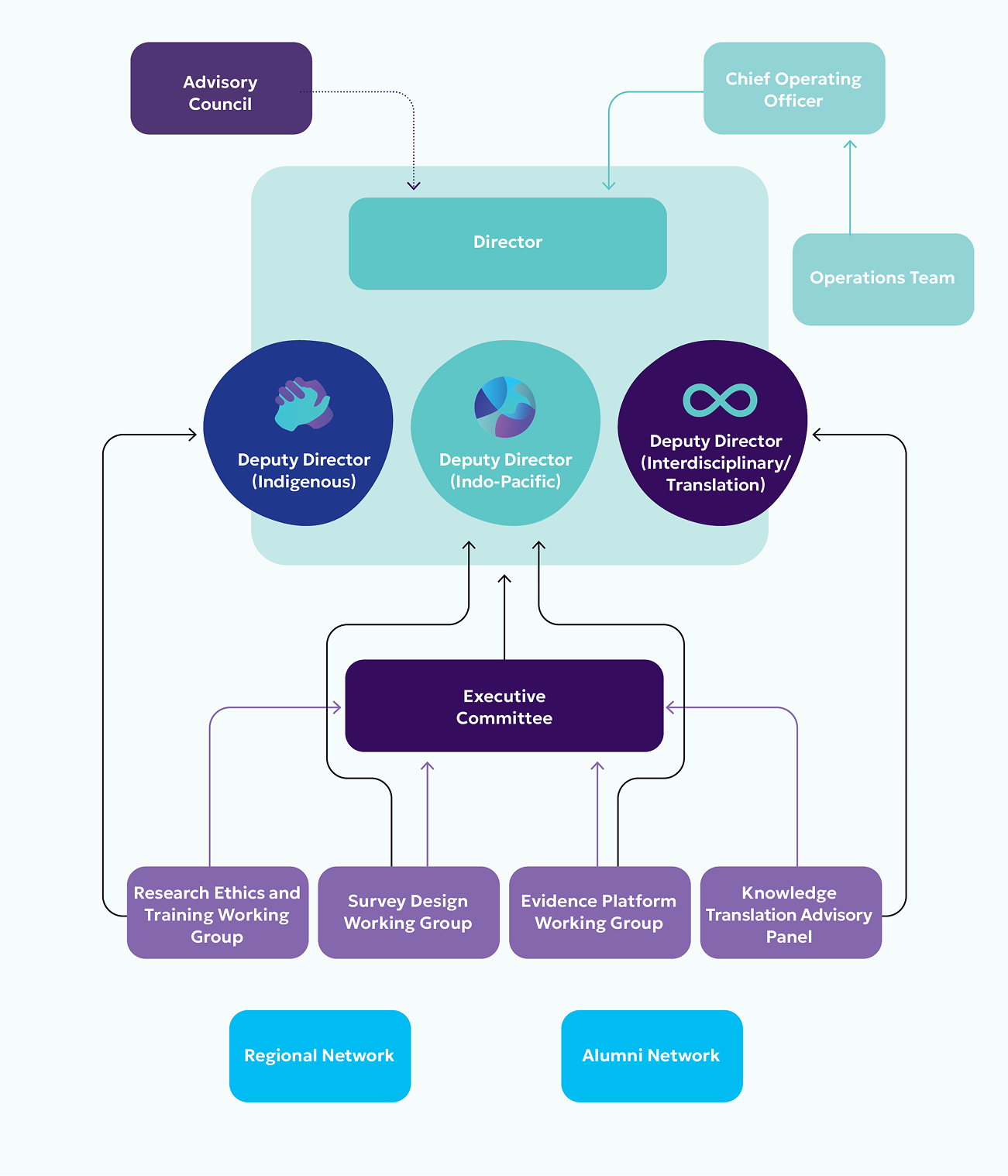
CEVAW's governance structure brings together an Advisory Council, an Executive Committee and specialised working groups to guide strategy and strengthen delivery across our programs.
In 2025, the Executive Committee met monthly and the Advisory Council convened regularly to drive strategic coordination and sector engagement. Our Equity, Diversity and Inclusion (EDI) Working Group reviewed the EDI Policy and Plan and produced new accessibility guidelines to ensure our outreach genuinely reaches people of all backgrounds, experiences and abilities. The Knowledge Transfer and Exchange (KTE) Advisory Group also advanced our knowledge‑translation efforts, keeping impact at the centre of our work.
We also strengthened our leadership team. Professor Pushkar joined as a Chief Investigator in September, leading workstream 1.3 at the Monash Node, while Dr Jane Holden commenced as Chief Operating Officer in July, enhancing operational capability across the Centre.
CEVAW launched its first Strategic Funding rounds in 2025, offering three tiers (<$5k, <$25k, <$50k). Five projects received funding for their ability to unify the Centre, model inclusive and Indigenous research excellence, challenge systems that perpetuate violence against women, and deliver strong value for money.
Finally, we initiated a Vision Refresh to guide CEVAW's next phase of growth and ensure our mission remains bold, focused and future‑ready.
Financials
CEVAW Performance Progress 2025
Key Performance Indicators (KPIs) are a set of quantifiable measures set by the Australian Research Council specifically for ARC funded Centres of Excellence. The KPIs are used to monitor and provide indicative progress of research outcomes.
Following are CEVAWs KPIs measured against the 2025 target and actual achievements.